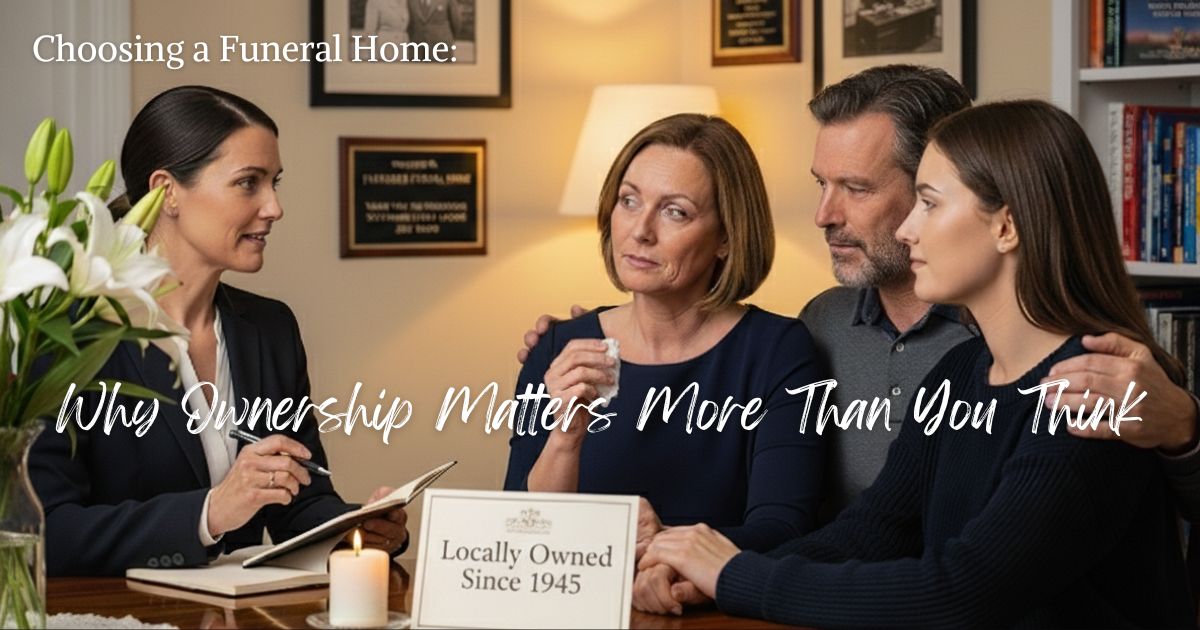
Navigating the funeral planning process is a difficult and emotional experience. One of the most significant decisions you’ll make is choosing a funeral home, and understanding the different types of ownership can help you make an informed choice that's right for your family.
While many funeral homes still bear the names of the families who founded them generations ago, their ownership structure may have changed. The landscape of the funeral industry has evolved, and today, you'll find independent, corporate, and even conglomerate-owned funeral homes.
Here's a breakdown of the key differences to help you understand what each model offers.
Independent Funeral Homes: Rooted in the Community
Independent funeral homes are the traditional model, often family-owned and operated for generations. They are typically deeply embedded in their local community, and their reputation is built on the relationships they've cultivated over the years.
- Personalized Service: Because they aren't bound by corporate policies, independent funeral homes can offer a high degree of flexibility and personalization. The same funeral director who helps you with the initial arrangements is often the same person who will guide you through the entire process, providing continuity and a familiar face during a difficult time.
- Community Connection: The owners and staff of independent funeral homes are often your neighbors. Their success is tied directly to the satisfaction of the families they serve, and they often support local organizations and causes. This connection can result in a more compassionate and understanding approach to your specific needs, traditions, and cultural nuances.
- Flexibility and Transparency: Independent funeral homes are known for their transparency in pricing and willingness to work with a family's budget. They aren't under pressure to meet sales quotas or push specific packages, allowing for a more open and honest conversation about what services and products are truly needed.
Corporate-Owned Funeral Homes: The Chain Model
Corporate-owned funeral homes are part of a larger, for-profit company that owns multiple funeral homes, often across a region or even nationally. These companies frequently acquire established, family-owned businesses but keep the original name to maintain the illusion of local ownership.
- Standardized Procedures: Corporate funeral homes often operate with a more standardized, "cookie-cutter" approach. While this can sometimes mean a more streamlined and efficient process, it can also limit the ability to customize services and can make the experience feel less personal.
- Resources and Network: As part of a larger network, corporate funeral homes may have access to a broader range of resources, which can be an advantage in certain situations. However, decision-making power is often centralized at a corporate headquarters, which can cause delays and reduce flexibility.
- Profit-Driven Focus: A key difference is the focus on profitability. Corporate funeral homes are accountable to shareholders or investors, and staff may be incentivized to sell higher-priced packages or add-ons. This can sometimes lead to a feeling of being "upsold" on services that you don't necessarily want or need.
Conglomerate-Owned Funeral Homes: The Giant Chains
Conglomerate-owned funeral homes are at the top of the corporate scale. These are massive, publicly traded companies that own hundreds or even thousands of funeral homes, cemeteries, and crematories across the country and the world. The biggest names in the industry, like Service Corporation International (SCI), operate under many different local names.
- Vast Scale and Reach: These conglomerates dominate the market. Their vast scale means they have immense purchasing power and can offer consistent goods and services across their network.
- Stockholder Accountability: As publicly traded companies, their primary obligation is to their shareholders. This can create an environment where a focus on maximizing short-term profits takes precedence over the deeply personal and emotional needs of grieving families.
- Lack of Local Control: Decisions about pricing, operations, and services are made far from the communities they serve. While a local manager may be on-site, they often have little authority to deviate from corporate protocols, which can lead to a less responsive and personal experience.
Making the Right Choice for Your Family
When choosing a funeral home, it's crucial to ask questions about ownership. Don't be afraid to ask a funeral director directly who owns the business. By understanding whether you're working with an independent, corporate, or conglomerate-owned firm, you can better anticipate the level of personalization, flexibility, and service you're likely to receive. Ultimately, the right choice is the one that provides the care, compassion, and support your family needs during a time of loss.