
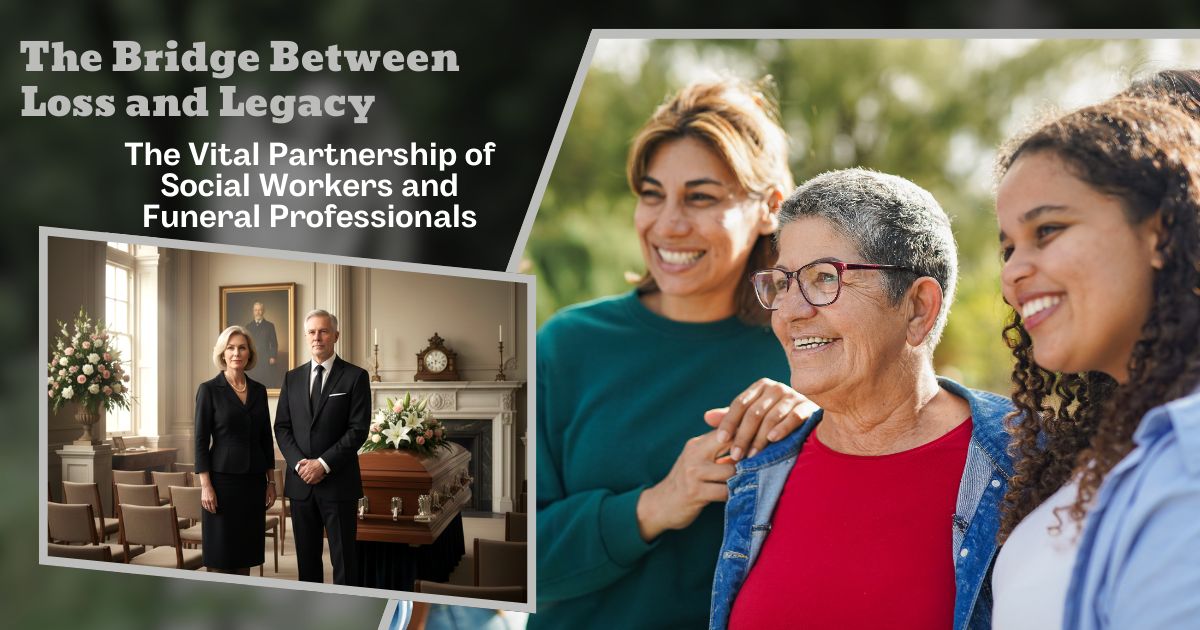
When a family experiences the death of a loved one, they often feel as though they’ve been dropped into an unfamiliar landscape without a map. In these moments, two distinct yet deeply connected professions step forward to provide a compass: the social worker and the funeral director.
While they serve families in different capacities, their work forms a critical bridge that carries people from the initial shock of loss toward the first steps of a lasting legacy.
The Hand-Off of Care
The relationship often begins in a hospital or hospice setting. A social worker is typically the first professional to sit with a family after a difficult diagnosis or a sudden passing. They provide the emotional stabilization and immediate crisis intervention needed to navigate the clinical environment.
As the focus shifts from medical care to honoring the life lived, the "hand-off" to a funeral home occurs. This transition is most successful when it feels like a continuum of care rather than a change in departments. When social workers and funeral directors communicate effectively, the family feels held by a cohesive network of support, ensuring that no detail—emotional or logistical—falls through the cracks.
Navigating the Emotional vs. The Practical
One of the most profound ways this partnership benefits families is through the balance of different expertise:
-
The Social Worker’s Role: They focus on the internal journey. They help families process the complex dynamics of grief, identify support systems, and manage the psychological impact of the transition.
-
The Funeral Director’s Role: They focus on the external expression of that grief. They translate a family's love and memories into a tangible service, handling the physical care of the deceased and the logistics of the ceremony.
Together, they ensure that the practical needs (permits, ceremonies, and burials) don’t overshadow the emotional needs (counseling, family mediation, and long-term healing).
A Shared Commitment to Advocacy
Both professions are rooted in advocacy. Social workers advocate for the patient’s wishes and the family’s mental well-being. Funeral directors advocate for the dignity of the deceased and the family’s right to a meaningful farewell.
In many cases, social workers help bridge the gap for families facing financial hardships or those needing specialized resources, such as grief support for children. By working in tandem, funeral homes can better tailor their services to meet the specific socioeconomic and emotional realities that a social worker has identified.
Celebrating Our Partners This March
As we celebrate Social Work Month, we recognize that our work at the funeral home would be exponentially harder without the foundation laid by dedicated social workers. They prepare the soil so that the seeds of a meaningful legacy can be planted during the funeral service.
To the hospital, hospice, and community social workers: Thank you for being the bridge. Your strength, patience, and empathy make it possible for families to cross from the darkness of loss into the light of remembrance.
HAVE QUESTIONS? WE ARE HERE TO HELP.
TRENDING BLOG POSTS & PODCASTS | BROWSE ALL
.png)